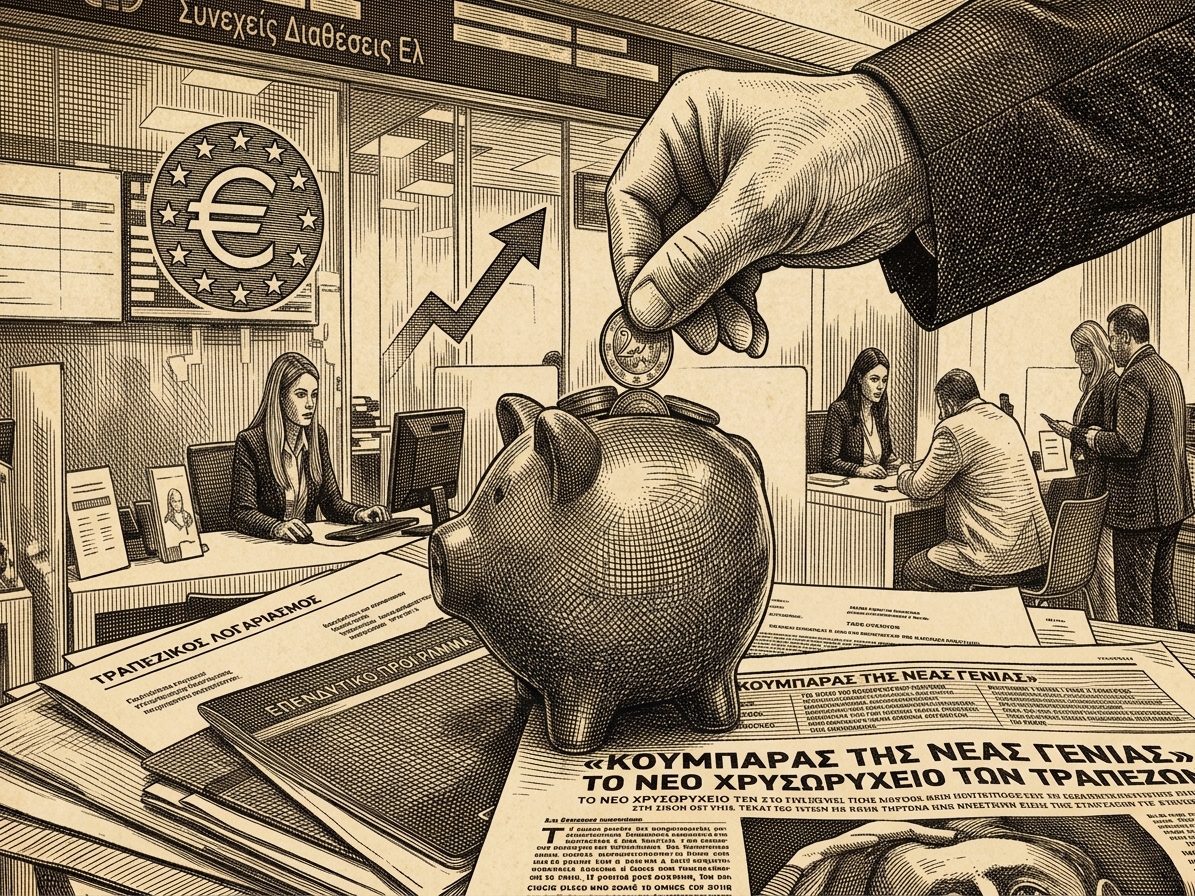
In a period when Greek society continues to measure its endurance against the increased cost of living, the four systemic banks choose to open a new chapter of burden for citizens, affecting the entire banking system.
Under the pretext of “modernization” and “harmonization with European standards”, the banks are proceeding with the imposition of mandatory monthly subscriptions for basic transaction packages. The cost may seem small (0.80 euros per month per customer); however, the mass nature of the measure turns it into a mechanism for extracting hundreds of millions of euros. Estimates for revenues that may reach up to 350 million euros in 2026 reveal that this is not a technical adjustment but a targeted choice to boost profitability.
Until today, a bank account was an obvious tool for economic participation. Access to deposits, basic money transfers, and the use of cards were elementary services. Now, maintaining them is being transformed into a subscription product. The customer is asked to pay to have access to their own money.
This move comes at a juncture where banks are already recording high profitability and distributing billions of euros in dividends, a large part of which ends up in foreign investment funds. The message being sent is clear: The social dimension of banking activity is retreating in the face of the logic of maximum return for shareholders.
The narrative of digital transition is presented as a necessary reform. However, at the same time that banks are drastically reducing their physical network, reducing staff through voluntary exit programs, and investing in automated systems to shrink operating costs, they are passing new burdens on to the consumer.
The invocation of “European practice” acts as a communication shield. In practice, however, the simultaneous adoption of almost identical pricing policies creates the sense of an informal alignment that essentially limits the citizen’s choices. When everyone charges in a similar way, competition becomes theoretical.
The paradox becomes more intense when one considers that the Greek banking system has been supported over time by the State through guarantees and mechanisms such as deferred tax credits (DTC). Meanwhile, depositors continue to see extremely low returns on their money. Thus, a distorted image is formed, as citizens receive minimal interest on their deposits, pay for basic services, and simultaneously finance the system’s stability. The banking relationship is turning from mutual cooperation into a one-sided burden.