–The government narrative loses yet another argument
In this very… neighborhood—these parts where we wander—the enduring story of humanity, the enduring story of Western civilization, pauses to look, to remember, and to smile.
In the Classical era—in Ancient Athens, when the creative ferment of ideas gave birth to the values that would guide Western humanity into a self-renewing future free from needless, painful ruptures—the conceptualization of democracy as a less… problematic framework for social coexistence cemented our nation’s historic reputation as the “cradle of Democracy.”
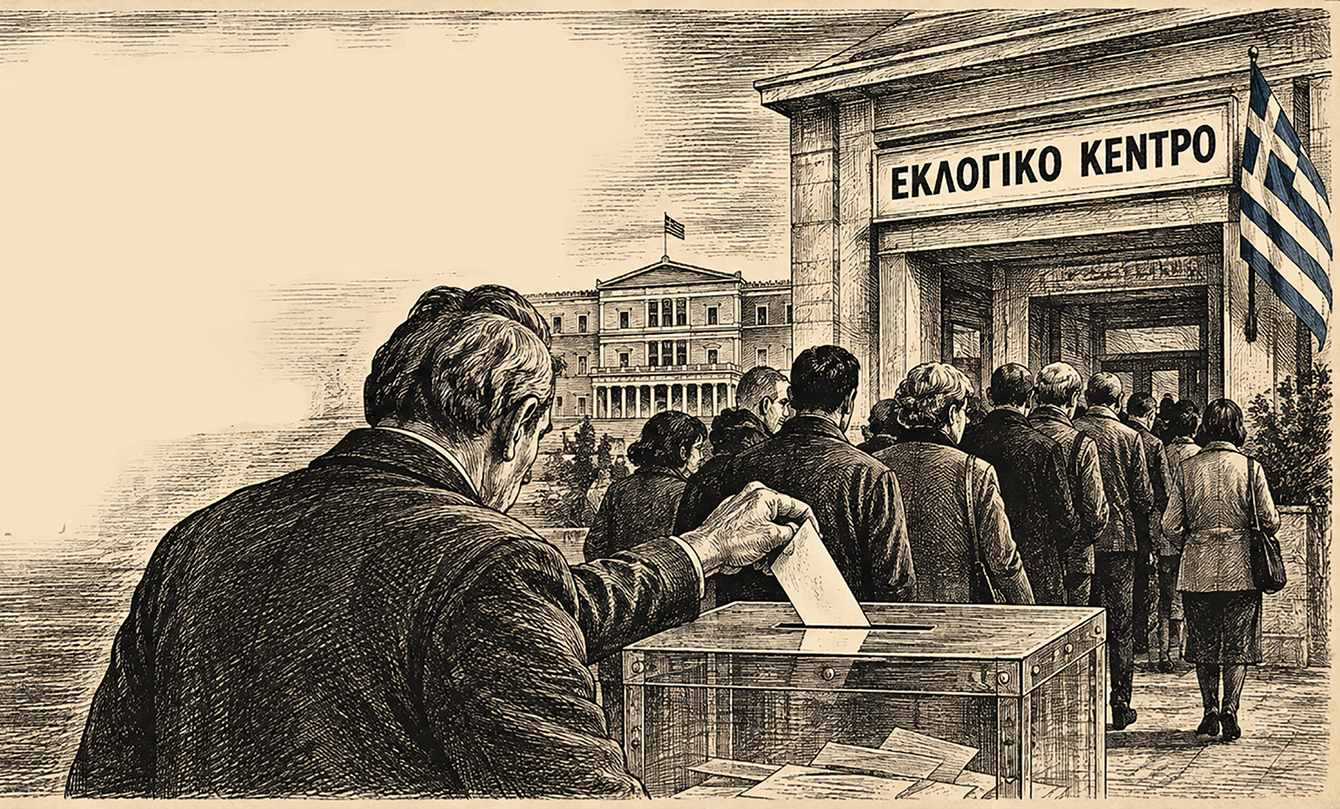
Democracy, by its very genetic and defining nature, entails the accountability of all exercised power and political authority to the ultimate judgment of the ballot box. It is at the polls that dreams, ambitions, and expectations intersect with the reality each citizen experiences—both in their individual daily lives and as part of the collective social whole.
A society’s electoral verdict does not emerge arbitrarily or merely by chance; nor is it the product of haste or superficiality. It entails a long-term process, one characterized by duration and complexity. Indeed, experience shows—and confirms—that in the final days before an election, as the preceding campaign draws to a close, the mosaic of priorities formed in the mind and psyche of every active citizen intensifies and spills over… rather clumsily into their immediate social circles. It is then—within the window of opportunity that opens at that precise moment, and against the backdrop of the prevailing circumstances—that the final shifts occur; shifts that often prove critical in shaping the ultimate outcome.
Amidst the dilemmas Kyriakos Mitsotakis’s government seeks to pose—leveraging the privilege and advantage inherent to any incumbent administration (especially one holding an absolute majority) to shape and dictate the news agenda, public discourse, and the terms of political confrontation—the prospect of ungovernability is intended to serve as a… bogeyman for an angry society, a society teetering on the brink of casting a punitive vote. However, the experience of daily life—combined with the shifting political landscape observed from one opinion poll to the next—demonstrates and confirms that the prospect of a lack of governance (or, more accurately, the difficulty of forming a multi-party coalition government) does not frighten Greek society. It does not appear significant enough to decisively influence the final verdict of the electorate, the way citizens approach the polls, or the choices they make regarding their future.
There are two fundamental reasons why Greek society has evidently moved past the fear of a lack of governance. On one hand, given that the majority of society is struggling and witnessing a decline in its quality of life, maintaining the status quo—that is, stability—is tantamount to stagnation; it equates to the perpetuation of a self-perpetuating deadlock. On the other hand, no one seriously believes that a lack of governance will actually ensue, given that the prospect of New Democracy securing an outright majority for a third time belongs to the realm of fantasy rather than reality. Both historical experience and the prevailing public sentiment all but predict the formation of a coalition government following the elections—a scenario common to 24 of the 27 European Union member states and one that has traditionally occurred in Greece whenever the country has faced a crisis. Indeed, ever since the onset of the national disaster associated with the bailout memoranda, Greece has been grappling with a deep, complex, multidimensional, and multifactorial crisis: a crisis of democracy, representation, and trust, as well as a crisis of institutions and values.
The only question remaining to be answered by the developments following the election results concerns who will lead such a coalition government. It also concerns the parallel impact this development will have on the leadership of current political parties—across the board and without exception.
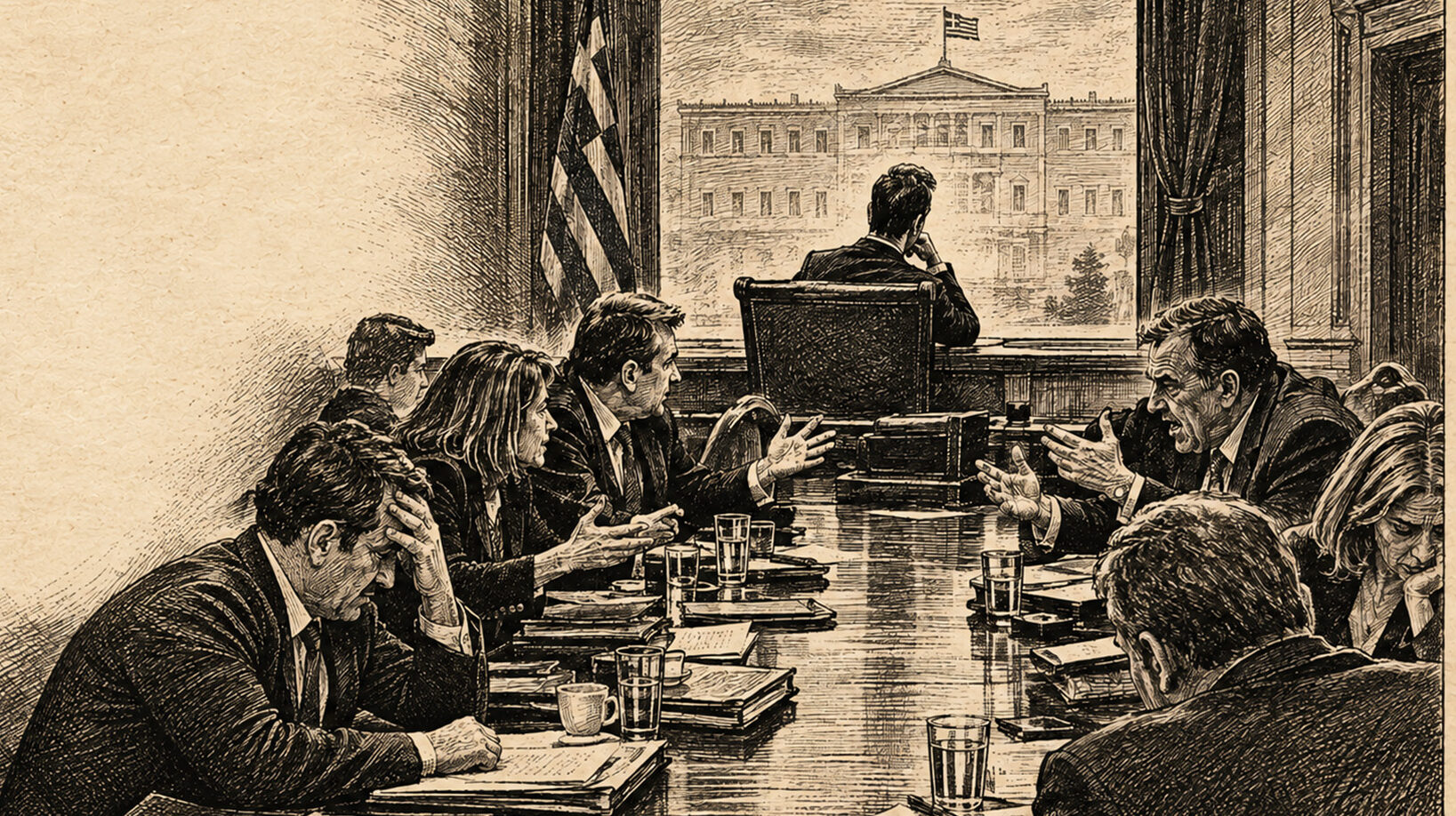
Given the prevailing climate within and beyond political circles, it must be considered a given that, for a coalition government to be formed, someone other than Kyriakos Mitsotakis would need to occupy the Maximos Mansion; Mitsotakis is currently burdened with the negative connotations associated with eight years of governing the country. It should also be taken for granted that he himself will take the initiative to facilitate the situation and developments, should he realize that the newly emerging reality is not moving forward.
Photo: Digital illustration / paron.gr
TO PARON