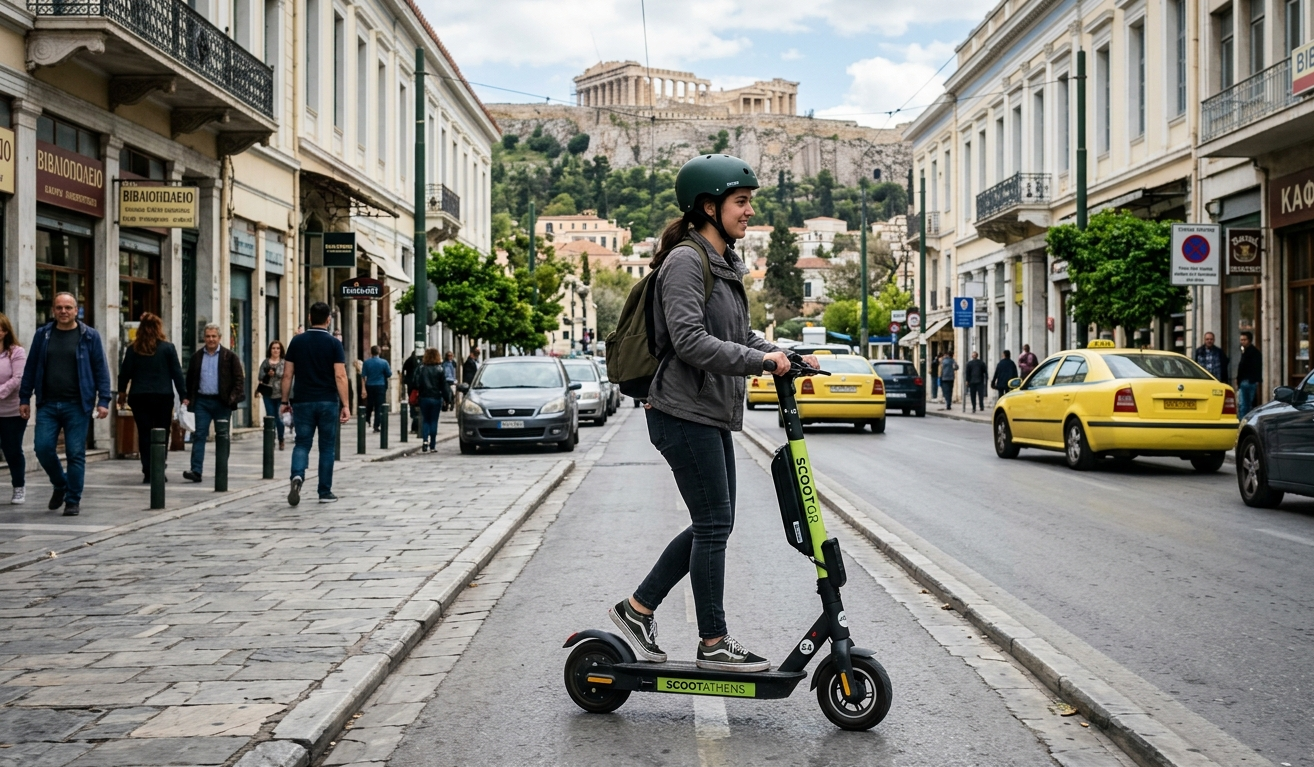
Since 2023, when they first appeared on our roads and sidewalks, until today, three years later, electric scooters have already claimed the lives of two minors, caused serious injuries to about a dozen others, and led to numerous accidents due to misuse.
Just the other day, a 12-year-old boy in Aspropyrgos, riding a scooter on a local road, was struck by a car and is currently fighting for his life. If we look back at these accidents, we see they are caused by the riders’ ignorance of road behavior, a lack of safety measures, and incredible operator errors.
All of this shows that we do not treat scooters as a means of transport, but as… toys. We have failed to establish rules and safety measures for their riders, nor a legal framework for their operation.
Anyone can take an electric scooter and hit the road—without signaling, without lights, without knowledge of traffic rules, without a helmet, etc.—becoming a deadly danger to themselves and other drivers they encounter. This is because they might enter a busy road at 10 km/h, hop on and off sidewalks, or ride against traffic.
But why is all this happening? Because there is no legal framework, and we still haven’t clarified whether electric scooters are vehicles or bicycles. Anyone getting on a scooter may not know the meaning of red and green lights, what traffic lanes are, or the role of pedestrian crossings. If a scooter rider moves against traffic and is caught, they face no consequences because there is no law requiring them to know road behavior or driving rules—the basics that anyone behind a wheel should know.
Since everyone takes a scooter and does as they please, without any basic rules to follow, disaster is inevitable. One might even say that, so far, the incidents are fewer than expected. There is no framework for the operation of e-scooters, nor for the businesses that rent them out. Everything is lawless and uncontrolled. Without elementary organization, principles, or instructions.
Private owners do whatever they want. Just the other day, someone was found riding a “tuned” scooter at 72 km/h. A pure deathtrap. Rental companies only collect revenue, bearing no responsibility. Their scooters are scattered everywhere; they have no designated storage areas or crews to collect and park them properly. It’s a complete mess, without control, without rules, without a beginning or an end.
Scooters are the mirror of modern Greece. Unregulated, left to chance, and disorganized. No planning, no law, no order. And then we find it strange when children are killed. It would be strange if we didn’t have accidents. Not just strange, but a miracle…
The rise of e-scooters in urban centers has brought convenience but also a tragic increase in road accidents. To ensure safety, we must understand the rules of the road. In this safety guide, we analyze the necessary precautions and the legal framework for using electric scooters in Greece to prevent further loss of life.
A safety guide
The use of electric scooters (e-scooters) has radically changed urban mobility in Greek cities, offering flexibility and a smaller ecological footprint. However, their unregulated use often leads to serious, and sometimes fatal, accidents.
The Essential Safety Guide for E-scooter Mobility
Road safety is not a matter of luck; it is a matter of proper preparation and strict adherence to regulations. To enjoy your commute without incidents, follow these fundamental steps:
1. Know the Traffic Code (KOK) for Micromobility In Greece, e-scooters are categorized based on their speed:
-
Up to 6 km/h: They are treated as pedestrians and can be used on sidewalks.
-
6 to 25 km/h: They are treated as bicycles. Use on roads with a speed limit over 50 km/h (e.g., major avenues) and on sidewalks is strictly prohibited.
2. Mandatory Protective Gear A fall from a scooter can be severe, even at low speeds.
-
Helmet: It is mandatory for all users. A standard bicycle helmet is the minimum level of protection required.
-
Reflectors: At night or in low visibility, wearing a reflective vest or using reflective elements is legally required.
-
Proper Footwear: Avoid flip-flops or sandals, as they do not provide the necessary stability for emergency braking.
3. Road Behavior Rules
-
One Rider Only: Scooters are designed for a single person. Carrying a second passenger shifts the center of gravity and dangerously increases braking distance.
-
No Headphones: You must remain fully aware of ambient sounds, such as car horns, approaching engines, or sirens.
-
Signal Your Turns: Since most scooters lack indicators, use hand signals to show your direction, just like cyclists.
4. Navigating Infrastructure Challenges Greek roads often harbor traps that can be fatal for the small wheels of an e-scooter:
-
Potholes and Manhole Covers: Even a small unevenness can cause a flip.
-
Slippery Surfaces: Road surfaces in many cities are “polished” and lack grip, especially when wet or dusty.
-
Double-Parked Cars: Always be alert for a car door opening suddenly in your path.
5. Responsible Parking Safety continues even after you dismount. Do not leave scooters in the middle of sidewalks or blocking wheelchair ramps. Proper parking shows respect for fellow citizens and prevents accidents for pedestrians with visual or mobility impairments.
A skateboard is a means of transportation, not a toy. Road awareness starts with the individual responsibility of each of us.